Shopping waterfront in Las Olas Isles is exciting, but the details behind the dock can make or break your deal. From seawall elevation to bridge clearances and flood insurance, the right checks protect your time and money. In this guide, you’ll learn the exact items to verify, the permits to request, and a simple workflow that keeps you ahead of surprises. Let’s dive in.
Why due diligence matters in Las Olas Isles
Tidal canals and local standards
Las Olas Isles sit on tidally influenced canals that connect to the New River and the Intracoastal Waterway. Broward County and the U.S. Army Corps used the area to model tidal flood risk and set regional seawall policy. That means today’s seawall standards and disclosures are backed by local data, and they directly affect what you can build and what you may need to upgrade over time. You can review the county’s regional seawall guidance and standards in the county’s summary of seawalls and tidal flood barriers.
Boat access: air draft and depth
Many listings mention “no fixed bridges,” but that does not guarantee smooth passage. You need to confirm air draft and under‑keel clearance for your vessel.
- The East Las Olas Boulevard drawbridge lists a closed vertical clearance of about 24 feet, and it operates on a regulated opening schedule. The East Sunrise Boulevard span in the area is cited at about 21–25 feet closed. The 17th Street Causeway is documented around 55 feet closed, which allows much taller air drafts. Always confirm the latest figures and opening times in the federal drawbridge operation rules.
- Depths change with tides and local maintenance. Use official nautical charts and Local Notices to Mariners for routing, shoaling notes, and obstructions. Do not assume a straight, dredged path because a neighbor’s boat looks similar to yours.
Seawalls and tidal flood barriers
Broward standards at a glance
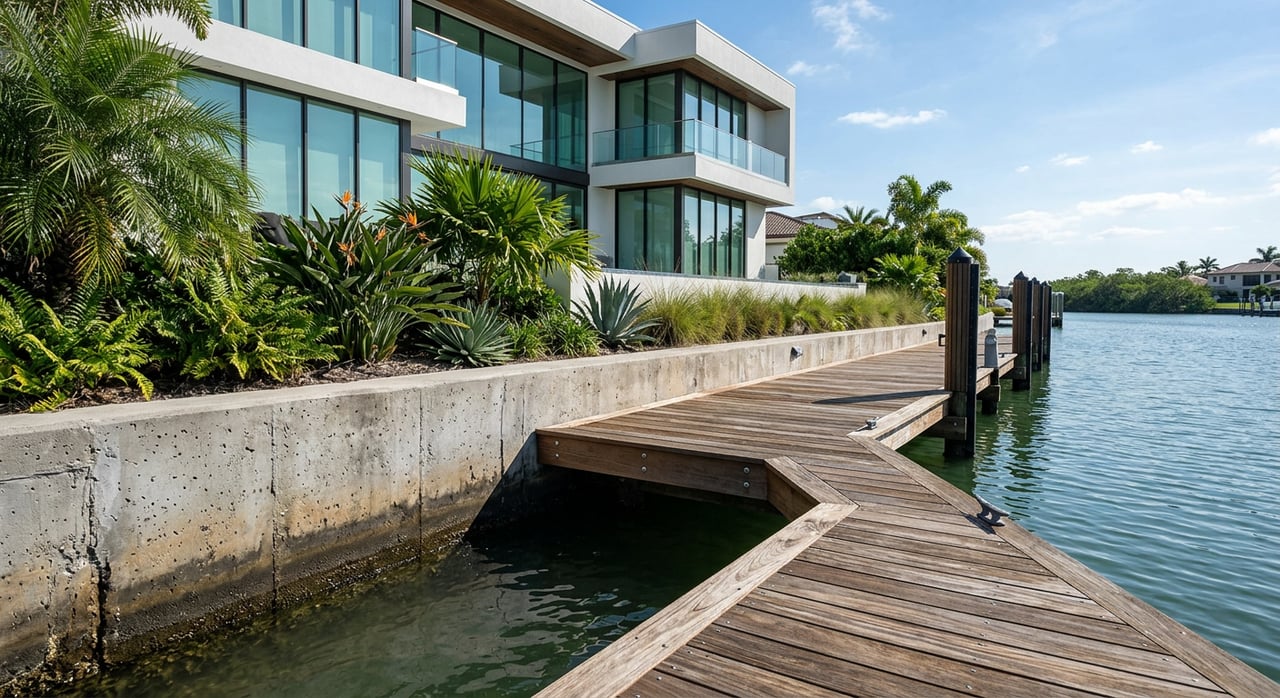
Broward County’s regional standard treats seawalls as tidal flood barriers and sets minimum elevations in NAVD88. New seawalls and substantial repairs must meet a minimum 5.0 feet NAVD88 design elevation. Applications filed before January 1, 2035 may be permitted at 4.0 feet NAVD88 if they are designed to reach 5.0 feet NAVD88 by January 1, 2050. Sales contracts in tidally influenced areas include a county disclosure that these standards may apply to the property. These details are outlined in the county’s seawalls and tidal flood barriers guidance.
What this means for you: Ask for the seawall’s top elevation in NAVD88 or order a survey to confirm it. If the wall sits below the standard, you may face a future upgrade or repair trigger under county or city rules.
How to assess a seawall before you buy
A waterfront inspection should go beyond a visual check.
- Order a licensed marine or structural engineer’s report. Ask them to evaluate the cap, panels, tiebacks, piles, drainage, and any signs of settlement or movement.
- Add a dive inspection if conditions suggest toe scour or hidden deterioration.
- Collect as‑built drawings, permits, and final approvals from the City and County. Look for the documented top and toe elevations in NAVD88 and the date of the last substantial repair.
- If the report shows issues, get written estimates from local marine contractors. Published contractor guides show very wide ranges for replacement, from a few hundred dollars to over $1,000 per linear foot depending on material, access, depth, and soil. Treat this only as ballpark and confirm site prices locally. For context, see this industry overview of seawall cost factors.
Mind the “gaps” and neighboring conditions
Broward’s regional approach aims to prevent tidal water from passing through lower or failing sections. If your wall is lower than neighbors, or if adjacent properties show deterioration, expect pressure to address elevations and repairs so water does not enter through a weak link. This can influence negotiation and timing.
Docks, lifts, dredging, and permits
City of Fort Lauderdale permit basics
Dock, boatlift, pile, and seawall work in Fort Lauderdale is its own permit category with clear submittal rules. Minimum applications typically include a current survey with elevations, signed and sealed plans by a Florida engineer or architect, and evidence of required environmental approvals. When dredging or jurisdictional waters are involved, you also need Army Corps coordination. Review the City’s Dock Permit Checklist to understand documents the City expects.
Federal and county authorizations
The U.S. Army Corps regulates work in navigable waters and dredge or fill activities. In South Florida, some routine residential docks and minor dredging may qualify under programmatic or regionally delegated permits, but certain scopes still need direct Corps authorization. Ask the seller for any Corps authorization or verification letter, and confirm details with the Corps if needed. For examples of programmatic permits and notices, see the Jacksonville District’s public notices and permit summaries.
If you see dredging evidence or dock modifications without matching permits, flag it. Unpermitted work can lead to enforcement or a requirement to restore conditions.
Dock features to verify on every listing
- As‑built dock plans and certified pile specifications.
- Boat lift or davit ratings, permitted vessel counts, and clearances to the navigation channel.
- Whether dredging was permitted, when it was last maintained, and whether any recorded covenants or conditions apply to the dock.
Flood zones, elevation, and insurance
Confirm your current FEMA map and BFE
Start with a FIRMette from FEMA’s official map portal to confirm the flood zone and panel for the exact property. Print and save it with your offer documents. You can create a FIRMette at the FEMA Flood Map Service Center. Broward County also posts an interactive resource and notes the FEMA maps effective July 31, 2024, which is helpful when you compare Base Flood Elevations for construction or major improvements. See the county’s Flood Zone Maps resource.
Elevation Certificates and building requirements
In Fort Lauderdale, Elevation Certificates are required for new builds and substantial improvements. If you are buying, request any existing Elevation Certificate or order a new one to confirm the lowest floor and equipment elevations relative to BFE and NAVD88. Elevation Certificates influence insurance pricing and whether your lender will require flood coverage. You can review the City’s guidance on construction and elevation certificates.
Get insurance quotes early
Obtain flood and homeowners quotes early in escrow. Compare NFIP and private flood options and verify how new mapping or a changed BFE could affect your premium. Treat insurance availability and price as a go or no‑go item and build that into your inspection period. You can reference your FEMA panel data through the FEMA Flood Map Service Center when you speak with insurers.
Your waterfront document checklist
Use this list to request records from the seller and pull public files. Save them in one folder for easy review.
- Recorded survey showing waterfront linear footage and property lines. Confirms exact frontage and dock/seawall locations.
- Elevation Certificate with NAVD88 datum. Drives NFIP premiums and building elevation requirements.
- Seawall as‑built drawings, permits, final approvals, and top/toe elevations in NAVD88. Ties directly to county resilience standards and future obligations.
- Recent engineer’s seawall inspection and any diver report. Identifies near‑term repairs and supports negotiation.
- Dock and boatlift permits, as‑built plans, pile data, and special inspector forms. Shows compliance with City and environmental rules.
- Any U.S. Army Corps authorizations or verification letters for docks or dredging. Confirms federal compliance and avoids enforcement risk.
- City and County permit history and code enforcement records. Flags open permits or violations you may inherit.
- Flood insurance history and any past claims. Gives context on prior events and costs.
- Canal or basin dredging and maintenance history. Informs current depths and future maintenance needs.
- Title search for easements, recorded dock covenants, and construction liens. Protects clear use and transfer.
- Bridge clearances and opening schedules along your route. Air draft varies with tide, so plan your transits.
- Recent invoices, signed engineer certifications, and warranties for seawall or dock work. Proves scope and quality of improvements.
A simple due diligence plan you can follow
Step 1: Map your flood risk
Pull a FIRMette and check the Broward interactive notes on current BFEs. If the property falls in a Special Flood Hazard Area, order an Elevation Certificate right away.
Step 2: Pull permits and authorizations
Request the City’s and County’s permit histories and ask the seller for all dock, lift, dredge, and seawall permits. Confirm any U.S. Army Corps permit numbers or verification letters.
Step 3: Inspect the waterfront structure
Hire a licensed marine or structural engineer to inspect the seawall and dock. Ask a surveyor to certify the seawall’s top elevation in NAVD88. Use the findings to request written contractor estimates for any repairs.
Step 4: Verify boating access
For your actual vessel, confirm route depths, bridge closed clearances, and opening schedules. Compare your air draft to the same datum used in the published clearance and build in a safety margin.
Step 5: Quote insurance early
Order flood and homeowners quotes before you waive contingencies. Confirm how the property’s elevation and FEMA panel affect the price.
Step 6: Negotiate from facts
Use engineering estimates and any confirmed permit obligations to negotiate credits, repairs, or an escrow holdback. Pay close attention to any requirement to raise the seawall under county rules.
How we help you buy with confidence
Waterfront due diligence is technical, but it does not have to slow you down. We coordinate the right inspections, pull complete permit files, and help you verify bridge, dredge, and insurance details so you can move forward with clarity. When needed, we bring in trusted local engineers and marine contractors to scope timelines and costs.
If you are considering a Las Olas Isles home, let us streamline the process and protect your interests from offer to close. Connect with The Branham Group to plan your waterfront search and next steps.
FAQs
What seawall height does Broward require in Las Olas Isles?
- Broward’s regional standard sets a minimum design elevation of 5.0 feet NAVD88 for new or substantially repaired tidal flood barriers, with limited pre‑2035 allowances designed to reach 5.0 feet by 2050.
How do bridge clearances affect ocean access from Las Olas Isles?
- Closed clearances like about 24 feet at East Las Olas and about 21–25 feet at East Sunrise limit air draft without openings, while the 17th Street Causeway is around 55 feet; always check the Coast Guard’s current schedule and datum.
Which permits should exist for a dock or boatlift in Fort Lauderdale?
- Expect City permits with signed and sealed plans, evidence of environmental approvals, and special inspection forms for piles; dredging or jurisdictional work should also have U.S. Army Corps authorization or verification.
How do FEMA flood zones impact my loan and insurance on Las Olas Isles?
- Your FEMA zone and Elevation Certificate help determine if the lender requires flood insurance and what you will pay; get quotes early and confirm the effective panel and BFE for the property.
What does a proper seawall inspection include before closing?
- A licensed engineer should assess the cap, panels, tiebacks, and drainage, often with a diver check for toe and pile conditions, plus a survey confirming the wall’s top elevation in NAVD88.